
Navigating Hormone Therapy Side Effects with Grace and Strength
- Jul 20, 2025
- 17 min read
Taking that first step into treatment is a monumental act of courage, and it’s completely normal to have questions about what comes next. If you’re facing hormone therapy as part of your breast cancer journey, know this: it’s one of the most powerful tools we have to protect your future. Understanding how it works is the first step to feeling empowered on this path.
Your Guide to Navigating Hormone Therapy
Starting hormone therapy can feel like you've been handed a map to a new country with no street names. That’s what this guide is for. Think of it as your trusted friend, here to help you make sense of it all, starting with the basics of what this treatment is and why it’s such a vital part of your healing and survivorship.
Let’s try a simple analogy. Think of hormone-positive (ER-positive or PR-positive) breast cancer cells as having a specific “lock” on their surface. The hormones estrogen and progesterone are like keys that can fit into these locks, unlocking the door and telling the cancer cells to grow and multiply.
Hormone therapy is a brilliant strategy to change the locks or hide the keys. It generally works in one of two ways:
It blocks the "lock." Some drugs, like Tamoxifen, get to the cancer cell first and sit in the receptor—the "lock"—so that estrogen can't get in. It's like putting gum in the lock so the real key won't fit. This heroically stops the cancer cell from getting the signal to grow.
It lowers the hormone levels. Other treatments, especially Aromatase Inhibitors (AIs), work by reducing the total amount of estrogen your body makes after menopause. This is like cutting off the fuel supply, leaving very little estrogen around to stimulate any cancer cells that might still be there.
Choosing this treatment is a proactive, life-affirming decision. You’re taking back control and shutting down a power source for the cancer. It’s a testament to your commitment to a long and healthy life.
Understanding the Journey Ahead
Knowing what might be coming can make a world of difference, turning that feeling of anxiety into one of confidence. Everyone’s experience with hormone therapy is unique, of course, but understanding the potential side effects and how to manage them is a key piece of thriving in survivorship.
This infographic gives a great high-level look at what that path can look like.
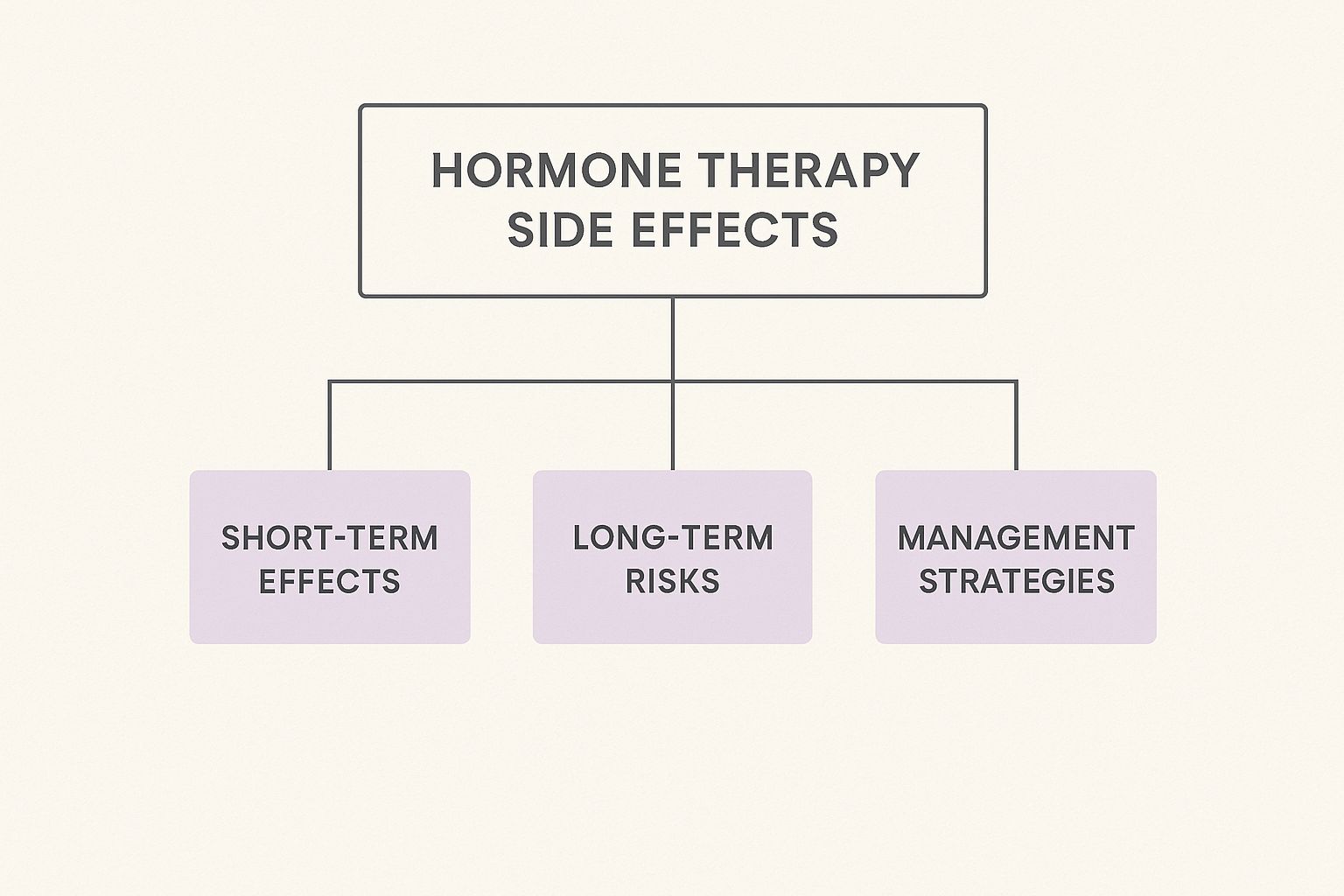
As you can see, while you might hit some bumps with side effects, there are always strategies to help you feel more like yourself.
This isn't just about getting through treatment; it's about being an active partner in your own wellness. You’re in the driver’s seat, and every choice you make is a testament to your own strength and resilience.
Understanding the "why" behind the treatment helps you see it not as something to be endured, but as a protective shield you’re putting in place for your future. You are not just a passenger here—you’re the pilot, and you have the knowledge and support to navigate whatever comes your way.
Common Hormone Therapies at a Glance
To help simplify things, here's a quick look at the most common types of hormone therapy you might discuss with your care team. Each one works a bit differently, and the right one for you depends on many personal factors, including whether your cancer was hormone-positive or negative.
Therapy Type | How It Works (In Simple Terms) | Who It's Typically For |
|---|---|---|
Tamoxifen | Blocks estrogen from attaching to cancer cells. | Both pre- and post-menopausal women with hormone-positive breast cancer. |
Aromatase Inhibitors (AIs) | Lowers the amount of estrogen the body makes. | Primarily post-menopausal women with hormone-positive breast cancer. |
Ovarian Suppression | Stops the ovaries from producing estrogen (temporarily or permanently). | Primarily pre-menopausal women, often used with another therapy for hormone-positive breast cancer. |
This table is just a starting point. Your oncologist will walk you through the specifics for your situation, weighing the pros and cons to find the best path forward for your long-term health and survivorship.
Managing Common Side Effects with Confidence

It’s completely normal to feel a little apprehensive about starting hormone therapy. Honestly, taking this next step in your survivorship journey shows incredible courage. Learning to meet any challenges that pop up with knowledge and grace is just the next part of that path.
I like to think of it like this: your body has been running on a specific hormonal setting for years, like a finely tuned thermostat. This treatment is now recalibrating that thermostat to keep you safe, and it can take a while for your system to settle into its new normal. Some days will feel great, and others might feel a bit off-kilter—and that is perfectly okay.
The key is realizing you have more say in this than you might think. This isn’t about just putting up with side effects; it's about actively managing them. Let’s walk through some of the most common ones and build a toolkit of real-life strategies to help you feel more like yourself.
Taming the Internal Heat Wave
For so many of us, hot flashes are the first thing that comes to mind with hormone therapy. One minute you’re fine, the next you’re hit with an overwhelming wave of heat that seems to come out of nowhere. It can be disruptive and frustrating, but you can absolutely learn to manage it.
Layer Up: This is my number one tip. Dress in layers you can peel off in a second. A light cardigan, a zip-up hoodie, or a pashmina over a basic top lets you adjust to your body’s whims.
Stay Cool at Night: Keep your bedroom as cool as you can and stick to breathable, cotton sheets. A small fan on your nightstand can be a game-changer. Some women also swear by "cooling" pillows or mattress toppers to get through the night.
Watch Your Triggers: Start paying attention to what might be setting off your hot flashes. Common culprits are caffeine, spicy foods, a glass of wine, and even stress. Keeping a little journal for a week or two can help you spot your personal patterns.
Understanding and Answering Fatigue
Cancer-related fatigue isn't just being tired. It’s a deep, bone-weary exhaustion that a good night’s sleep rarely touches. It’s a completely different beast, and it needs a different approach—one filled with self-compassion.
The most important thing to remember is to be kind to yourself. Your body is doing something incredible, and that takes a massive amount of energy. Instead of trying to "push through," learn to listen to its signals.
"Your energy is a precious resource, not an endless one. Treat it with care. On days when you feel drained, giving yourself permission to rest isn't a weakness—it's a vital part of your healing and a profound act of self-compassion."
Interestingly, gentle and consistent movement can often do more for this kind of fatigue than staying still. A short walk outside, some light stretching, or a gentle yoga session can actually boost your energy and lift your mood. It’s all about finding a rhythm of rest and activity that works for your body, on your schedule.
Navigating Moods and Emotional Shifts
Hormonal changes can feel like an emotional rollercoaster. You might find yourself snapping more easily, feeling anxious, or just battling a case of the blues. The first thing to know is that this is a physiological response to your treatment—it's not you, and it's not a personal failing.
This is an incredibly common part of the cancer experience, and you are not alone. Research shows that mood shifts are a frequent side effect, affecting many women navigating this chapter of their lives.
Finding an outlet for these feelings is crucial for your well-being.
Creative Expression: Journaling, painting, or even just putting on a playlist that matches your mood can give you a safe space to process everything.
Mindfulness and Breathwork: Taking just five minutes for quiet meditation or some deep breathing exercises can help ground you when your emotions feel like they're running the show.
Stay Connected: Please don't go through this alone. Talk to a trusted friend, find a support group (online or in-person), or reach out to your care team. Sharing what you're going through makes you feel less isolated and more understood.
Living well with hormone therapy is all about building a personal toolkit of strategies that work for you. Remember, every small step you take to manage these challenges is a powerful move toward embracing a full, vibrant life during and after treatment.
Nourish Your Body to Ease Side Effects

Let's talk about food, but not in a way that feels like another chore. Think of nutrition as one of your most powerful allies in managing hormone therapy side effects. This isn't about rigid diets or saying goodbye to everything you love. It’s about seeing every meal as a chance to nourish your body, calm inflammation, and build yourself up from the inside out—a beautiful act of self-care.
Imagine your plate as a vibrant canvas. The more colour and variety you can add, the more tools you’re giving your body to feel better. It’s an empowering way to reclaim some control on your cancer journey, turning what you eat into a genuine act of resilience.
Fueling Your Fight Against Inflammation
If you're dealing with new or worsening joint pain and stiffness, you are not alone. It's one of the most common complaints during hormone therapy, and it happens because lower estrogen levels can trigger inflammation throughout the body. The good news? You can fight that fire with your fork.
Think of inflammation as a smouldering ember in your joints. Anti-inflammatory foods act like a splash of water, cooling things down. We’re not talking about exotic, hard-to-find ingredients, but delicious, whole foods you can easily weave into your day.
Omega-3 Powerhouses: Fatty fish like salmon, mackerel, and sardines are packed with omega-3 fatty acids, which are absolute superstars at taming inflammation. Try to get in two servings a week.
The Colourful Crew: Berries, leafy greens like spinach and kale, and bright veggies like bell peppers and broccoli are loaded with antioxidants that act like bodyguards for your cells.
Healthy Fats: Avocados, olive oil, nuts, and seeds provide healthy fats that help lubricate your joints. Something as simple as a sprinkle of walnuts on your morning oatmeal or some avocado on toast is a delicious upgrade.
By focusing on adding these "hero" foods, you’ll naturally start crowding out pro-inflammatory choices without feeling deprived. It’s a positive, uplifting approach that adds joy, not stress, to your plate.
Building Strong Bones with Every Bite
Hormone therapy can impact your bone density over time, so it's incredibly important to give your skeleton the support it needs. I like to think of my bones as a bank account; I want to make more deposits than withdrawals. Thankfully, your diet is one of the best ways to do just that.
Calcium and Vitamin D are the dynamic duo for bone health. Calcium is the main building block, but Vitamin D is the key that unlocks the door, allowing your body to actually absorb and use that calcium.
"Your diet is one of the most accessible and empowering tools you have. Every meal is an opportunity to make a choice that supports your long-term health and makes you feel stronger today."
Consider these simple additions to boost your bone-building power:
Dairy and Fortified Alternatives: Milk, yoghurt, and cheese are the classics. If you’re dairy-free, just look for fortified plant-based milks like almond, soy, or oat.
Leafy Greens and More: Kale, bok choy, and broccoli are fantastic plant-based sources of calcium.
Small Fish, Big Impact: Canned salmon and sardines (with the soft bones left in) are amazing sources of both calcium and Vitamin D.
Sunshine and Supplements: Our bodies make Vitamin D from the sun, but depending on where you live, that can be a real challenge for much of the year. Talk to your doctor; they can recommend a Vitamin D supplement to make sure your levels are where they need to be.
Small swaps can make a huge difference. Choosing a yoghurt for a snack, tossing spinach into a smoothie, or opting for a fortified cereal are all simple steps that contribute to a stronger, more resilient you. This is about making food a source of strength, helping you not just get through treatment, but flourish in survivorship.
Soothing Joint Pain and Staying Active

If you've started waking up feeling stiff, or if your knees and hands are suddenly aching in a way they never did before, please hear this: you are not imagining it. You are most certainly not alone.
Joint pain is one of the most common and downright frustrating hormone therapy side effects for breast cancer survivors. It can make you feel decades older overnight and quietly steal the joy from your daily life.
This happens because estrogen plays a key role in keeping our joints lubricated and keeping inflammation under control. When hormone therapy sends your estrogen levels plummeting, it can feel like someone turned off the body's internal sprinkler system, leaving your joints feeling dry, stiff, and creaky.
But this does not have to be your new normal. This is a challenge, and you can absolutely meet it with the right plan. It's about turning that frustration into forward, hopeful motion.
Gentle Movement: The Ultimate Joint Soother
When you're in pain, the absolute last thing you might want to do is move. I get it. It feels completely counterintuitive. But honestly, gentle, consistent movement is often the very best medicine for the kind of joint stiffness that comes with hormone therapy.
Think of it like a rusty door hinge. The more you gently and carefully work it back and forth, the smoother its movement becomes. Your joints work in a similar way.
This isn’t about pushing through a punishing workout or running a marathon. It’s about being kind to your body with activities that get the blood flowing and encourage flexibility.
Stretching: Start and end your day with some gentle stretches. Focus on major joints like your hips, knees, and shoulders. Even five minutes can make a massive difference in how you feel first thing in the morning.
Walking: A simple daily walk is one of the most powerful and accessible exercises out there. It gets your joints moving without the high impact that can make things worse.
Yoga or Tai Chi: These practices are phenomenal for improving both flexibility and balance—two things that are crucial for your long-term joint health. They also come with the incredible side benefit of calming the mind.
Understanding The Long-Term Picture
It's completely natural to worry if this new joint pain is a red flag for something more serious. It's important to differentiate between temporary aches and chronic conditions. While research on the direct link between this specific therapy and long-term arthritis is ongoing, we know that managing inflammation is key.
This knowledge isn't meant to scare you. It's meant to empower you. It shines a light on just how important it is to be proactive about your joint health right now. The steps you take today—like gentle movement and an anti-inflammatory diet—are powerful investments in your future comfort and mobility.
"Your body is communicating with you. These aches are a signal to move with more intention, to nourish with more care, and to treat yourself with the grace you so deeply deserve. Listen with compassion and respond with action."
Complementary Therapies That Can Help
Sometimes, you just need a little extra support, and that's where complementary therapies can be a wonderful addition to your self-care toolkit. Many survivors have found real, lasting relief from practices that work right alongside their medical treatment.
Acupuncture is a popular choice for a reason. It's based on traditional practices and involves placing tiny, thin needles at specific points on the body to help relieve pain and calm inflammation. So many women I've spoken to report a noticeable drop in joint stiffness after a series of sessions.
Another invaluable resource is physical therapy. A good physical therapist can design a personalized exercise program specifically for you. They'll focus on strengthening the muscles around your sore joints, which provides better support and takes a huge amount of strain off them.
For a much deeper dive into managing this specific side effect, you can check out our guide on joint pain and hormone therapy. It’s packed with more tips and insights from others who have walked this exact path.
Remember, building your support team is a huge part of learning to thrive.
Building a Strong Foundation for Your Future Health
Making the decision to start hormone therapy is a huge commitment. It's a powerful, long-term promise you’re making to yourself and your future. As you walk this path of survivorship, it's also the perfect moment to build a solid foundation for the vibrant years ahead—to take joyful, confident ownership of your long-term wellness.
While we've talked about the more immediate hormone therapy side effects, two other vital areas need our attention: your bone health and your heart health. The hormonal shifts from treatment can affect these parts of your body in quiet ways, so being proactive is your superpower here.
This isn’t about adding more worry to your plate. Far from it. Think of this as creating a game plan that feels empowering and genuinely good—exploring simple exercises, nourishing foods, and smart habits that help you build a resilient body for a beautiful life after cancer.
Your Bones: Our Unsung Heroes
Think of your bones as the silent, sturdy framework holding you up through everything. Before treatment, estrogen acted like a dedicated security guard for this framework, helping to keep it dense and strong. Hormone therapy, by its very nature, lowers your estrogen levels. This means that security guard isn't on duty in the same way anymore.
Over time, this change can lead to a gradual loss of bone density, a condition called osteopenia or, in more serious cases, osteoporosis. But you have so much power to counteract this. The key is to start giving your bones exactly what they need to stay strong, starting today.
A fantastic way to do this is with weight-bearing exercise. That might sound intimidating, but it doesn't mean you have to start lifting heavy at the gym (unless you want to!). It simply means doing activities where your bones have to support your body’s weight. This sends a direct signal to your bone cells to get busy and keep building themselves up.
Simple, effective weight-bearing exercises include:
Walking or jogging: A daily walk is one of the kindest things you can do for your bones, your heart, and your mind.
Dancing: Turn on your favourite playlist and just move! It’s fun, freeing, and incredibly effective.
Climbing stairs: Ditch the elevator and take the stairs whenever you get the chance.
Bodyweight exercises: Gentle squats, lunges, and push-ups (even against a wall) all count.
Fueling Your Framework with Nutrition
Just like a house needs the right materials to be sturdy, your bones need specific nutrients to maintain their strength. The two biggest players on the team are Calcium and Vitamin D.
Calcium is the main mineral that makes up your bones, but your body can’t absorb and use it without its essential partner, Vitamin D. They are a true dynamic duo.
"Taking charge of your long-term health is one of the most inspiring parts of survivorship. Every walk you take, every nourishing meal you eat—these are powerful statements of resilience and hope."
Making sure you get enough of both is easier than you might think and can be woven right into the delicious foods you already enjoy.
Calcium-Rich Choices: Dairy products like milk, yoghurt, and cheese are the classic go-to's. For plant-based options, look for fortified almond or soy milk, tofu, leafy greens like kale, and canned salmon or sardines (with the bones).
Finding Vitamin D: Your body can actually make Vitamin D from sunlight, but that can be tricky, especially in certain climates. Fatty fish like salmon is a great food source, but most people find a supplement is the most reliable way to get enough. It's always best to talk to your doctor about the right dose for you.
By focusing on these simple exercise and nutrition strategies, you are actively building a stronger, more resilient foundation for your body. These aren't just chores to check off a list; they are acts of self-care that protect your future and help you thrive for years to come.
Nurturing Your Emotional Wellbeing Through Treatment
Let's be honest: your emotional health is the very heart of your survivorship journey. Stepping onto the path of hormone therapy can feel like walking directly into an emotional storm, and I want this space to be your safe harbour. It’s time we talk openly about the emotional hormone therapy side effects—the anxiety, the mood swings, the shifts in libido—and to validate every single thing you are feeling right now.
This experience is so much more than just a physical one; it reaches deep into your emotional and mental state. It is completely, 100% normal to feel overwhelmed, irritable, or just plain sad. These feelings aren't a sign that you're not coping. They are a direct physiological response to the massive hormonal shifts happening inside your body. You have permission to feel it all.
Your Toolkit for Emotional Self-Care
Getting through this means building your own personal toolkit of practices that bring you back to your centre. It’s all about finding small, consistent ways to care for your mind and spirit, especially on the days when it feels like an uphill battle. Think of these as your anchors in that emotional storm.
Mindfulness for a Moment of Calm: When that wave of anxiety starts to rise, your breath is your most immediate and powerful tool. Just pausing to take five deep, slow breaths can send a signal to your nervous system that it’s okay to relax. You don't need a special cushion or a silent room; you can do this while waiting in line at the grocery store or before you even get out of bed.
Journaling to Process Your Thoughts: Your feelings need a place to go. A journal is a private, judgment-free zone where you can untangle all the thoughts swirling in your head. It doesn’t have to be perfect or poetic; it can be a messy, honest brain dump of everything you're holding onto.
Connecting with Your Circle: Isolation can make everything feel so much heavier. Reaching out to a trusted friend, a family member, or a support group of women who just get it can be an absolute lifeline. You don’t have to carry this alone.
This is your official permission slip to prioritize your mental health just as much as your physical health. Asking for support isn't being a burden; it is a brave and necessary act of self-love and an essential part of your healing.
Reclaiming Joy and Intimacy
Hormone therapy can also bring changes to your sense of self and your libido, which are incredibly personal and often difficult topics to talk about. A decreased interest in sex is a very real side effect, and it can feel isolating for both you and your partner. The key here is open communication, a whole lot of patience, and a willingness to explore new ways of connecting.
This is also a time to proactively and intentionally cultivate joy. What small things still light you up? Is it a walk in nature? Blasting your favourite song? A quiet cup of tea with a friend? Intentionally scheduling these small moments of pleasure is a radical act of resilience. For a deeper dive into the mental and emotional journey, we offer more support on **navigating the psychological effects of breast cancer**.
Your emotional wellbeing isn't an afterthought; it's the foundation you'll build your vibrant life on after cancer. Be gentle with yourself, honour your feelings, and remember that nurturing your spirit is one of the most powerful things you can do.
Your Hormone Therapy Questions Answered
When you’re walking this path, questions are bound to bubble up. It’s completely normal to wonder about the long-term, what to expect, and how this treatment really fits into your life after the chaos of active breast cancer treatment. This is a safe space for those questions, where we can tackle them with clear, compassionate answers to help you move forward with a bit more confidence.
Is This Therapy Safe in the Long Run?
This is probably one of the biggest, most important questions on your mind. Hormone therapy for breast cancer is a powerful tool designed to cut down your risk of the cancer coming back. It’s important to distinguish it from menopausal hormone therapy (MHT/HRT), which is prescribed for menopause symptoms and has been linked to increased breast cancer risk.
A major 2019 study looked closely at the long-term use of menopausal hormone therapy. It found that the longer women used it, the higher their risk of developing breast cancer became, and that risk stuck around for more than a decade after stopping. You can read more about these findings on the CBC News website.
It's critical to understand that your oncologist is prescribing hormone-blocking therapy for a completely different reason: to prevent a recurrence of a known cancer. Having a frank conversation with your care team is the best way to understand the benefits for your specific situation and weigh them against any potential long-term risks.
Will I Have to Deal with Side Effects Forever?
This is such a common and understandable fear. The good news? For many women, the worst of the hormone therapy side effects often start to fade after the first few months as your body figures out its new normal. You are not alone in this, and your care team is your partner in navigating these challenges. They have so many strategies to help you feel more like yourself again.
Remember, this part of the journey is all about finding a new kind of balance. Being proactive with your nutrition, gentle movement that feels good, and carving out time for emotional self-care can make a massive difference in how you feel from one day to the next. You aren't just surviving; you are actively building a strong, vibrant future for yourself.
At Grace Grit and Pink Ribbons, we truly believe in the power of sharing our stories and finding practical support that actually works. We're here to walk alongside you with resources and encouragement for every single step of your journey. Visit us at https://www.gracegritandpinkribbons.com to find your community.


Comments