
Your Guide to Living with Cancer and Thriving
- Jul 22, 2025
- 17 min read
When you get a cancer diagnosis, it can feel like the world just stops. But that moment, as jarring as it is, isn't the final page. It’s the start of a new chapter—one defined by a kind of resilience you never knew you had. This is your personal roadmap for actively living with cancer, not just surviving it, filled with inspiring yet realistic advice for your journey.
Your Journey Starts Here, It's Not Your Destination

Hearing the words "you have cancer" is an earth-shattering moment. It doesn't matter if it's breast cancer, another type, or a specific diagnosis like Hormone Positive or Hormone Negative—the future suddenly feels terrifyingly uncertain. It's completely normal to feel a tidal wave of fear, anger, and confusion. Give yourself the grace to sit with those feelings, without judgment.
But it’s just as important to know this diagnosis isn’t the end of your story. Think of it more as the beginning of a different kind of journey. You're the main character, and you get to define yourself not by the illness, but by how you choose to live with it. This path is about finding new pockets of joy, celebrating the smallest victories, and building a solid support system to hold you up on the hard days.
Reframing Your Perspective From Day One
Your mindset is an incredibly powerful tool. I’ve found that shifting from seeing this as a "battle" to "navigating new terrain" can make a world of difference. A battle implies a winner and a loser, which just adds a layer of pressure you don't need. Navigating, on the other hand, is about learning, adapting, and finding your way forward, one step at a time.
This guide is meant to be a companion on that journey. We'll walk through real, practical ways to manage treatment side effects, understand how nutrition can support your body, and build the emotional grit you need for the road ahead.
"A cancer diagnosis does not have to be the end of your story, but rather the beginning of a new chapter. It’s an opportunity to discover your inner strength, redefine your priorities, and find joy in the present moment."
What This Journey Entails
Living with cancer means looking at your whole self—it's a holistic experience that touches every single part of your life, from the physical to the emotional and everything in between.
Here’s a glimpse of what we'll explore as you move forward:
Understanding Your Diagnosis: Getting a handle on your specific cancer, like whether it is Hormone Receptor-Positive or Negative, is the first step to becoming an active, empowered participant in your own care.
Managing Treatment: We’ll talk about real-life strategies for dealing with side effects from chemo, radiation, or hormone therapy so you can protect your quality of life.
Nourishing Your Body: Using food as a form of medicine is crucial. It can help boost your energy, support your immune system, and aid in recovery.
Building a Support System: You'll need to lean on friends, family, and especially other survivors who just get it in a way no one else can.
Embracing Survivorship: This is about navigating life after active treatment ends—managing long-term effects and figuring out your "new normal" with courage and hope.
This path is yours and yours alone, filled with unique challenges and personal triumphs. Remember, you have the strength to navigate this new reality, and there’s a whole community here to walk alongside you, every step of the way.
How to Manage Treatment Side Effects with Grace
Cancer treatments are our strongest allies—lifesavers designed to give us our future back. But let’s be honest: they can feel like a full-time job for your body. Managing the side effects is a huge part of living with cancer, and doing it with grace means listening to your body, speaking up for what you need, and giving yourself endless compassion.
Think of it this way: your body is a garden, and treatment is a necessary, controlled storm meant to clear out the weeds. Afterwards, the garden might feel a bit battered and messy. The goal isn't to pretend the storm didn't happen, but to gently tend to the soil, add nutrients, and give it the care it needs to grow strong again.
This is your real-life guide to those challenges. It’s not about just "toughing it out"—it’s about treating yourself with the kindness you absolutely deserve.
Conquering Fatigue and Nausea
The fatigue from cancer treatment is like nothing I’ve ever felt before. It’s a deep, bone-weary exhaustion that sleep doesn’t always touch. Instead of fighting it, I’ve learned to work with it. Short, 15-20 minute power naps have been far more helpful for me than long, groggy ones that just leave you feeling worse.
Nausea is another constant companion, especially with chemotherapy. The very thought of food can be a turn-off, but I’ve found that an empty stomach only makes the nausea more intense.
"Your energy is a precious resource, not a limitless supply. Learning to conserve it for what truly matters is one of the most powerful skills you'll develop on this journey. It's not weakness; it's wisdom."
To get a handle on these two major side effects, try these small but powerful adjustments:
Eat Small, Frequent Meals: This keeps your blood sugar from crashing and your stomach from feeling completely empty. Stick with bland foods like crackers, toast, or a little bit of rice.
Stay Hydrated: Sip on clear liquids all day long. Ginger tea, peppermint tea, or even just water with a slice of lemon can be incredibly soothing.
Gentle Movement: It sounds completely backward, but a short, slow walk can sometimes give you a little energy boost. Just listen to your body and don’t you dare push it.
Navigating Physical and Cognitive Changes
For so many of us, the physical changes—like hair loss or skin issues—are one of the most visible and emotionally draining parts of treatment. It’s a constant, public reminder of everything you’re going through. But remember, you are in control of the story. Whether you rock a bald head, a beautiful scarf, or a wig that makes you feel a bit more like yourself, the choice is 100% yours.
And then there's "chemo brain." That frustrating mental fog that makes it hard to find the right word or remember why you walked into a room. This is a very real, and very annoying, side effect. Be patient with yourself. I live by my notebooks and phone reminders, and I've learned not to be shy about asking people to repeat things. It’s a temporary side effect of treatment, not a reflection of who you are.
If you're on hormone therapy for Hormone Positive breast cancer, you might be dealing with a whole different set of challenges, like hot flashes, joint pain, or mood swings. These are also manageable, but they have their own rulebook. For a more detailed look, you can find a lot more information about navigating [chemotherapy side effects and treatment complications](https://www.gracegritandpinkribbons.com/post/chemotherapy-side-effects-and-treatment-complications) right here on the blog.
Finding Your Balance with Nutrition and Support
What you eat can become a powerful tool in your wellness kit. While there’s no single magic “cancer diet,” certain foods can genuinely help ease side effects. Protein-rich foods, for example, can help your body repair tissues, while colourful fruits and vegetables deliver antioxidants to support your system.
You don't have to figure this all out on your own. Lean on your support network, and please, don't hesitate to ask your medical team for a referral to a dietitian who specializes in oncology. They can offer specific, tailored advice for your unique situation, whether you're Hormone Positive or Negative. Finding what works for you is a process of gentle trial-and-error and, most importantly, self-care.
When you're walking through a breast cancer diagnosis, the topic of food can feel overwhelming. One minute, you're reading about a "miracle" diet online, and the next, you're handed a long list of foods to avoid. It’s enough to make anyone’s head spin.
Let’s quiet all that noise for a second. Instead of thinking about food as a set of complicated rules, let's reframe it. See it as your ally—a real, practical tool you can use every single day to support your body in this journey.
Nourishment during treatment isn’t about chasing perfection. It’s about giving your body the fundamental building blocks it needs to stay strong, better manage the side effects of treatment, and heal. This is true whether you’re navigating treatment for Hormone Positive or Hormone Negative breast cancer, as each path places its own unique demands on your body.
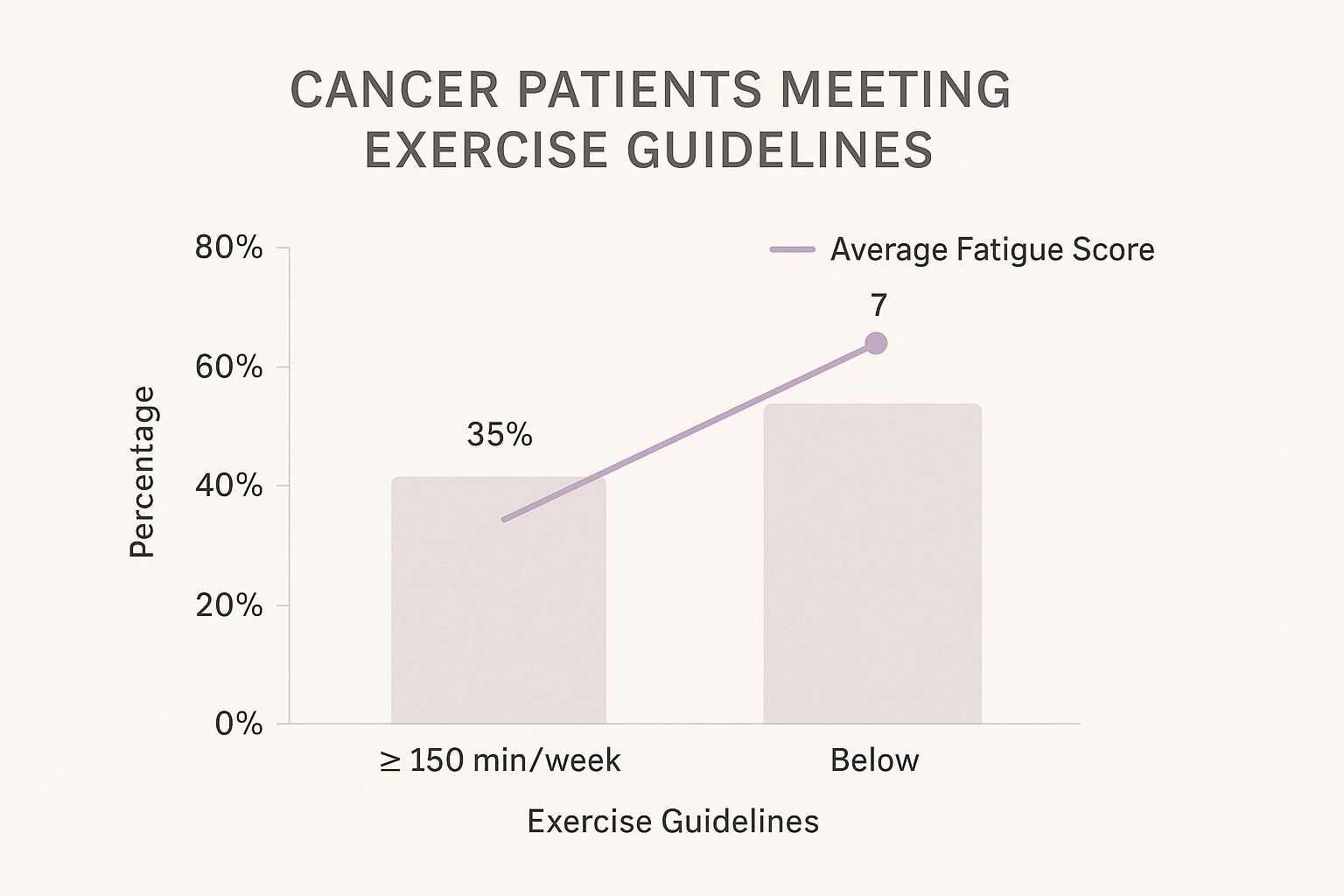
The image above really drives home the connection between gentle movement and managing fatigue, which goes hand-in-hand with good nutrition. The takeaway is powerful: patients who manage even basic exercise report feeling significantly less tired. It’s a clear reminder that small, consistent lifestyle choices can make a huge difference in your day-to-day quality of life.
Finding a Nutrition Approach That Works for You
I need to be clear about something: there is no single, one-size-fits-all "cancer diet." The best way to eat is the way that works for you—for your specific treatment plan, your body's current needs, and even your state of mind. The real goal is to focus on a balanced mix of nutrients that helps you maintain a healthy weight, hold onto muscle mass, and keep your energy up.
A great place to start is by filling your plate with a variety of colourful, plant-based foods. Think fruits, vegetables, whole grains, and legumes. They are absolutely packed with the vitamins, minerals, and antioxidants your cells need for protection. Lean proteins—like chicken, fish, eggs, and beans—are also incredibly important for helping your body repair tissue that can be damaged by treatments like chemotherapy and radiation.
This isn't just a personal wellness tip; it's a global health priority. To put it in perspective, in 2020, Latin America and the Caribbean reported over 220,000 new cases of breast cancer, which led to nearly 60,000 deaths. These staggering numbers show just how vital proactive health measures, like good nutrition and early detection, are in the bigger picture. You can learn more about the global impact from the Pan American Health Organization’s resources on cancer prevention and control.
Using Food to Tackle Treatment Side Effects
Honestly, one of the most powerful roles food can play is helping you manage the side effects of treatment. So many of the common struggles—from nausea and mouth sores to changes in taste—can be made more bearable with a few simple tweaks to what you eat.
"Food becomes a form of self-care. It's about listening to what your body is asking for—whether that's a bland soup when you feel nauseous or a flavourful smoothie when nothing tastes right. It's an act of kindness to yourself."
Instead of getting frustrated by these challenges, try to see them as little puzzles you can solve. For example:
Taste Changes: If food has a metallic taste, try using plastic cutlery and cooking in glass pots and pans. Adding something tart, like a squeeze of lemon or lime, can also help cut through that unpleasant flavour.
Mouth Sores: Soft, soothing foods will be your best friend. Think smoothies, yogourt, mashed potatoes, and scrambled eggs. You’ll want to steer clear of anything too acidic, spicy, or crunchy that could irritate your mouth.
Loss of Appetite: When a big meal feels completely overwhelming, shift your thinking. Try smaller, more frequent "mini-meals" or snacks throughout the day. A handful of nuts, a piece of cheese, or a protein shake can feel much more manageable.
Remember, survivorship begins the moment you're diagnosed. The small, nourishing choices you make today are a real, tangible part of your journey. They help you feel more in control and better equipped for whatever comes next.
The table below is a quick-reference guide to help you match the right foods to specific challenges.
Your Food-as-Medicine Toolkit for Side Effects
Use this quick guide to find foods and tips that help manage common treatment side effects, making your journey a little easier.
Common Side Effect | Foods & Strategies to Try | What to Approach with Caution |
|---|---|---|
Nausea or Upset Stomach | Ginger tea, crackers, toast, rice, bananas (BRAT diet). Small, frequent meals. | Greasy, spicy, or overly sweet foods. Strong smells. |
Mouth Sores or Dry Mouth | Smoothies, yogourt, puréed soups, scrambled eggs. Suck on ice chips. | Acidic foods (citrus, tomatoes), spicy foods, crunchy or hard foods (chips, raw veggies). |
Changes in Taste/Smell | Use plastic cutlery. Marinate meats in juice or sweet sauces. Try tart flavours like lemon. | Foods with strong, lingering odours. Anything that tastes "off" to you. |
Loss of Appetite | Nutrient-dense snacks (nuts, cheese, protein shakes). Eat small portions every 2-3 hours. | Large, intimidating meals. Don't force yourself to eat when you feel very unwell. |
Constipation | High-fibre foods: whole grains, fruits (prunes, berries), vegetables, beans. Drink plenty of water. | Processed foods, large amounts of cheese and red meat. |
Fatigue | Complex carbs for sustained energy (oatmeal, quinoa). Lean protein. Stay hydrated. | Sugary snacks and drinks that cause energy crashes. |
I hope this toolkit helps you feel more confident and graceful in nourishing yourself. It's about giving your body what it needs, one gentle meal at a time.
Navigating Your Emotional and Mental Landscape
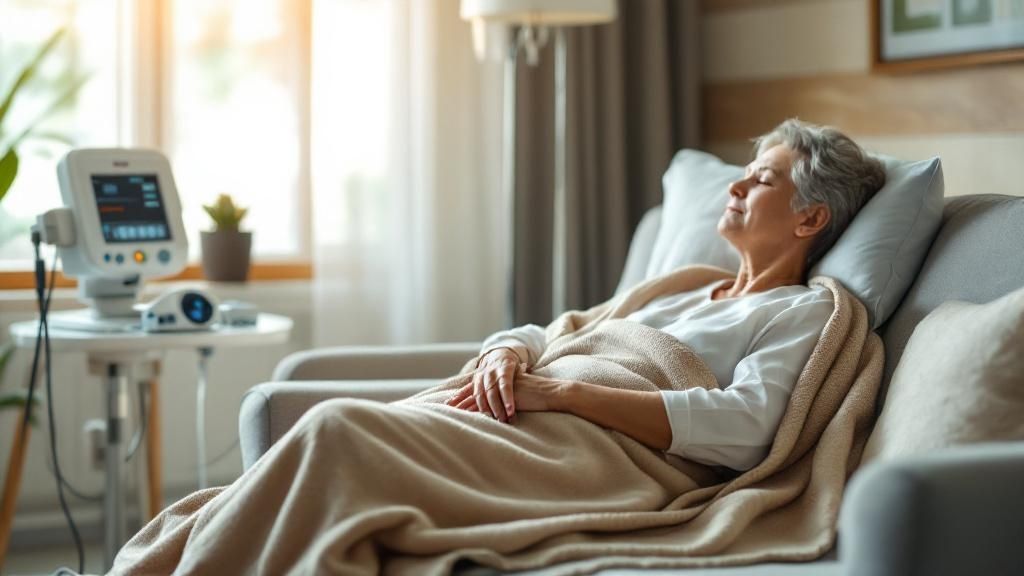
Let’s be honest: the journey of living with cancer is as much a mental and emotional marathon as it is a physical one. From the moment you hear those words, you're thrown into a whole new world of feelings.
There’s the gut-punch of fear. The grief for the life you had just moments before. And then there's that persistent, low-grade hum of anxiety that becomes a constant companion—especially before scans. It has a name many of us know all too well: 'scanxiety.'
Every single one of these emotions is valid. There is no "right" way to feel. It’s completely okay to feel hopeful one day and utterly overwhelmed the next. This emotional rollercoaster isn't a sign of weakness; it's just part of the experience. Giving yourself permission to feel it all, without judgment, is an incredible act of self-care.
Honouring Your Feelings and Finding Resilience
Your mental health isn’t a secondary concern here—it’s a core part of your well-being. Honouring it means making real space to process what’s happening. You do not have to put on a brave face for everyone, all the time.
True resilience isn’t about being relentlessly positive. It’s about being honest with yourself and finding the tools to sit with the hard stuff, to get through it without letting it consume you.
This is where simple practices can become your anchors. Things like journaling, mindfulness, or just taking a quiet walk don't magically erase the difficult feelings, but they can make them feel more manageable. They create a little pocket of peace where you can breathe and reconnect with yourself, outside of the cancer narrative.
Redefining Who You Are Beyond the Diagnosis
Cancer has a sneaky way of trying to take over your identity. Suddenly, you're a "cancer patient" first and everything else—your career, your hobbies, your role in your family—feels like it's fading into the background. Reclaiming who you are is a gentle, ongoing process.
"You are not your diagnosis. You are a whole person who is experiencing cancer. Remembering that distinction is a powerful tool for preserving your sense of self and your spirit."
This might look like rediscovering an old hobby or finally trying a new one. It could be as simple as calling a friend and making a pact to talk about anything but cancer. It’s about consciously making room for all the parts of you that have nothing to do with treatment schedules or survivorship.
This is such a deep and personal part of the journey. For a closer look, our article on [understanding and managing the psychological effects of breast cancer](https://www.gracegritandpinkribbons.com/post/navigating-the-ups-and-downs-understanding-and-managing-the-psychological-effects-of-breast-cancer) offers some really valuable insights and strategies.
Practical Tools for Your Emotional Toolkit
Building emotional well-being is an active practice. Just like you show up for medical appointments, setting aside time for your mental health is vital. Think about adding some of these to your routine:
Connect with a professional: A therapist or counsellor who specializes in oncology can provide a safe, confidential space to unpack everything you're feeling. They offer proven strategies for managing anxiety and depression that can make a real difference.
Embrace creative outlets: Sometimes emotions are too big for words. Painting, writing, gardening, or music can be incredible outlets for expressing what’s inside.
Practice mindfulness: Simple breathing exercises or guided meditations can help ground you in the present moment, dialing down the power of future worries and what-ifs.
Seek peer support: Talking to others who just "get it" is invaluable. Support groups, whether you find them online or in person, are a powerful reminder that you are not alone in this.
You Are Not Alone: Finding Your Support Tribe
One of the hardest parts of living with cancer is the profound sense of isolation it can create. Even when you’re surrounded by people who love you, a unique loneliness can creep in, making you feel like no one truly understands what you’re going through. But I need you to hear this, loud and clear: you are not alone on this path.
Finding your 'tribe'—that group of people who just get it without needing an explanation—is one of the most powerful things you can do for your spirit. This support system becomes your emotional safety net, offering strength, practical help, and a shared sense of hope when you need it most.
The Power of Shared Experience
Your family and friends are your lifeline, but there’s a special kind of comfort that comes only from connecting with fellow survivors. These are the people who speak the language of "scanxiety," who know the bone-deep fatigue that treatment brings, and who can nod in solidarity when you talk about the emotional rollercoaster of survivorship.
Whether you're navigating a Hormone Positive or Hormone Negative diagnosis, talking to someone who has walked a similar path can feel like taking a deep, calming breath. It validates every feeling and transforms what feels like a solitary battle into a collective one.
How to Build Your Support System
Finding your people can take a little effort, but it is so worth it. Your tribe might end up being a mix of old friends and brand-new connections.
Here are a few places you can start looking:
Patient Support Groups: Ask your hospital or cancer centre for recommendations. These groups, whether they meet in-person or online, offer a structured, safe space to share and learn from others who are in the thick of it, too.
Credible Online Communities: Websites and forums dedicated to breast cancer can provide incredible connection and information. They let you connect with others on your own time, which is perfect for those low-energy days.
Letting People In: So often, your existing circle of friends and family desperately wants to help but has no idea how. Be specific. Instead of saying "I need help," try asking, "Could you pick up groceries for me on Tuesday?" or "I'd love some company during my chemo session next week."
"Letting others help you isn't a sign of weakness; it's an act of strength. It takes courage to be vulnerable and allow your community to lift you up."
Building this network is a core part of the healing process itself. If you want to read more on this, I’ve shared some of my personal reflections on what this truly feels like in my [breast cancer journey](https://www.gracegritandpinkribbons.com/post/breast-cancer-journey) right here on the blog.
Remember, community reminds us that while the path is personal, the journey is shared.
Embracing Your New Normal After Treatment

Ringing that bell or taking your last dose of medication is a day you dream about. It’s a huge, emotional victory. But in the quiet that follows, a single, heavy question often starts to echo: what now? This next chapter is all about survivorship—a lifelong process of rediscovering who you are and redefining your life after active treatment ends.
Let's be clear: this isn't about forgetting what you've been through or trying to snap back to the person you were before. That person is gone. Instead, it’s about carefully, and gently, weaving this profound experience into your life's story. Think of it as adding a significant, character-defining chapter to your book, not letting it become the entire story. You’ve more than earned the right to live a full, vibrant life.
Navigating Life After the Storm
Life after treatment means learning to manage the things that can hang around. Whether you're dealing with a fatigue that just won't quit, joint pain from hormone therapy for Hormone Positive breast cancer, or the emotional scars of the whole ordeal, these challenges are very real. The key is to approach them with the same patience and grace you gave yourself during the fight.
This "new normal" is also an opportunity to listen to your body in a way you never have before. You have to learn to celebrate every small win—a day with a little more energy, a walk that doesn't hurt, a moment of genuine, quiet peace. These are the victories that truly define what living with cancer and beyond really looks like.
"Survivorship isn't about leaving cancer behind. It's about learning to live with it in a new way—to carry the lessons without letting it carry you. It's about finding strength in your scars and celebrating the person you've become."
The need for strong support systems is a global one. Cancer is a massive health issue worldwide, and the numbers bring home just how many people are walking this path. For instance, in Latin American and Caribbean countries, there were approximately 1,470,274 new cancer cases and over 713,000 deaths in 2020 alone. These figures, which you can read more about on the National Center for Biotechnology Information's site, show just how critical ongoing care and survivorship resources are for all of us.
Moving Forward with Purpose
Finding your footing again is all about moving forward with a renewed sense of purpose. For so many of us, this experience completely reshuffles our priorities. It gives you a crystal-clear lens on what actually matters in life.
Here are a few ways to start embracing this next phase:
Prioritise Follow-Up Care: This is non-negotiable. Staying on top of your appointments, scans, and screenings is one of the most powerful and empowering things you can do for your health and your peace of mind.
Embrace New Perspectives: You’ve seen life from a viewpoint most people can't even imagine. Use that hard-earned wisdom. Appreciate the present moment and pour your energy into the people and passions that genuinely bring you joy.
Share Your Story (If and When You're Ready): For some, sharing their journey becomes a source of healing. It can make others feel less alone and give your own experience a powerful new meaning. You don't have to, but the option is always there.
This is your journey. It’s about proving that life after a cancer diagnosis isn't just about surviving; it's about finding a way to thrive. It’s about creating a future that is rich, meaningful, and completely, unapologetically yours.
Your Questions, Answered
A cancer journey is full of questions. Big ones, small ones, and ones that pop into your head at 3 a.m. It's completely normal to feel like you’re trying to find your way in a fog, and that’s why this space exists—to offer clear, heartfelt answers to some of the questions we all share.
How Do I Tell My Family and Friends?
Sharing this news is one of the most personal things you’ll ever do. The most important thing to remember is that you are in the driver's seat. You decide who, when, and how. Many of us find we need a little time to sit with the diagnosis ourselves before letting others in.
When you’re ready, pick a time and place where you feel safe and won't be rushed. You get to control the narrative. You can share every detail or just the basics—setting those boundaries isn’t just okay, it’s a healthy way to protect your own emotional energy. Your story, your rules.
What Does Hormone Receptor-Positive or -Negative Mean?
This is one of the first big pieces of the puzzle your doctors will use to map out your treatment. Think of hormone receptors as tiny "docking stations" on the surface of cancer cells. It’s all about what’s fuelling the cancer’s growth.
Hormone Receptor-Positive (HR+): This means the cancer cells have docking stations for hormones like estrogen (ER-positive) or progesterone (PR-positive). These hormones act like fuel, telling the cancer to grow. Because of this, your treatment will likely include hormone-blocking therapies to cut off that fuel supply.
Hormone Receptor-Negative (HR-): This simply means the cells don't have these docking stations. Since hormones aren’t driving their growth, hormone therapy won't work. Instead, your medical team will turn to other powerful treatments, like chemotherapy, to fight the cancer directly.
Knowing your specific status—whether you are Hormone Positive or Hormone Negative—is what allows your team to create a treatment plan that’s truly tailored to you.
"Understanding the 'why' behind your treatment plan is incredibly empowering. It shifts you from being a passenger to being an active, informed partner in your own care."
How Do I Deal With the Fear of Cancer Coming Back?
Ah, the fear of recurrence. This is one of the most common and toughest parts of survivorship. It’s a heavy feeling, and the first step is just to let yourself feel it. Acknowledge that it's real and completely valid. You've been through something huge; of course you're going to worry.
From there, I’ve found the most powerful thing is to focus on what you can actually control. It helps bring the power back to you.
Show up for your follow-ups: These appointments are your best friends in proactive health monitoring.
Embrace a healthy lifestyle: Focus on nourishing food, gentle movement that feels good, and getting enough rest. These are real, tangible things you can do every single day to support your body.
Find your calm: What helps you manage stress? Maybe it's mindfulness, a yoga class, a walk in the woods, or picking up a hobby you used to love.
Talk it out: Sharing this fear in a support group or with a therapist can shrink its power. A burden shared is a burden lightened.
For many of us, the fear never vanishes completely, but it does get quieter. It moves from the front seat to the back, letting you get on with living your life.
Is It Okay to Feel Sad or Angry, Even When I Get Good News?
Yes. A thousand times, yes. This experience is a messy, beautiful, complicated tangle of emotions. There is no "right" way to feel.
You are allowed to feel a wave of relief after a good scan, and in the very next breath, feel a profound sadness for everything it took to get there. You can be grateful to finish treatment and furious about the long-term side effects you’re now left with. These feelings aren’t contradictory; they’re human. Give yourself the grace to feel it all, without an ounce of judgment. It’s a crucial part of healing the whole you.
At Grace Grit and Pink Ribbons, we get it. We know this journey is about so much more than medicine—it’s about body, mind, and spirit. We’re here to be a supportive community, with practical resources and real stories to walk alongside you, every step of the way. Find your sanctuary with us at https://www.gracegritandpinkribbons.com.


Comments